
Available forms
Choose from the options below to make a change, or reach out to our office.
If you determine you have a leak, you would need to take steps to repair it or contact someone who would be able to. The District cannot make any recommendations on who to hire.
You will NOT always see water above ground if you have a leak, especially if you live in a rocky area.
Common culprits for leaks are toilets, sinks, anywhere you have a connection in the water line, livestock waterers or water hoses left on.
If you suddenly have low pressure, check your meter to see if a leak has occurred. Water softeners can also cause low pressure if they are having an issue. If we are experiencing any leaks or if work is being done, information is available online at our website, Facebook, and Twitter pages. If you do not see anything relating to you, call the office.
First you will need to locate your meter pit. These are typically located at the end of a drive or near the road. There will be a round metal lid marked “water meter” and you need to open the lid to access the meter. (Sometimes using the back of a claw hammer may help). The meter is located inside the pit. If you see wires attached, please gently lay the lid to the side taking care not to disconnect the wires. There is no electricity attached to the wires, and it is still safe to access the meter pit.
If there is water inside the pit, you will need to use something to scoop out the water or by using a pump if you have one available. Some meter pits may regularly hold water. It may also be from run off due to weather conditions, or could be from a potential leak.
Next you will need to determine what type of meter you have.
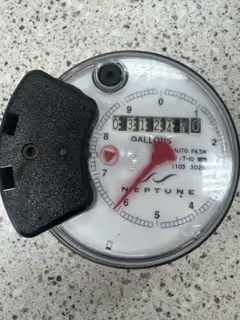
INSTRUCTIONS:
First make sure there is no water running inside or outside.
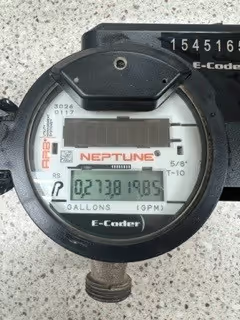
INSTRUCTIONS:
First make sure there is no water running inside or outside.
Most Ecoders will have a black lid on a hinge on the meter. You will need to lift open the lid to see the meter face. You will see a solar panel and digital reading box. Sometimes the numbers may not be visible because the meter is “sleeping.” If that happens, you can wake up the meter by shining a bright flashlight onto the solar panel (similar to the picture above). It may take 15-30 seconds for the reading to appear. (If the meter begins to flash the code”low light” you will need a brighter light source.)
Once the meter is awake, the numbers will become visible.
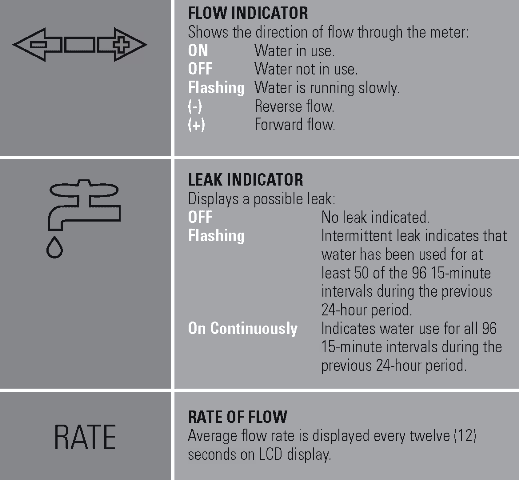
Next take a reading, wait 30-60 minutes without using water, and then take another reading. If the reading changes, water is being used. You can also check the Flow Rate on the meter to see if it is indicating use at any time.
***See chart below for additional information regarding the symbols on the meter:
***If you find that you have a leak, the water can be turned on and off at the meter when not in use to help minimize the water loss until you can get the leak repaired. You can repeat the previous steps to narrow down possible locations for a leak by using shut off valves (if available), such as a shut off to the house or any outside hydrants.
During extremely cold temperatures, make sure the meter pit lid is securely closed when not in use to prevent the meter from freezing.
We provide water solutions for homes, businesses, and new developments. Learn how we can support you.
View all available documents